OG CANNABIS INSURANCE.COM

SO. CAL’S BEST INSURANCE SERVICES, INC.

9587 Arrow Rte. Suite K
Rancho Cucamonga, CA 91730

(877) 473-7979

GET A QUOTE

Available in All Legalized States

CBD and Hemp Insurance Now Available

OG Cannabis Insurance Blog

The insurance game is an ever-changing environment, especially in the Cannabis Dispensary Insurance sector. There are a variety of different factors (e.g. cannabis laws and policies) that can affect the way your insurance works and how you and your business are covered.

The OG Cannabis Insurance blog keeps you up to date on cannabis insurance, laws and policies, and dispensary insurance news so you can be proactive on protecting yourself when the unexpected happens. We update our cannabis insurance blog regularly so check back soon for more posts!

Cannabis Property Insurance Co-Insurance Clause Explained

Cannabis Property Insurance Co-Insurance Clause Explained

Property Insurance Coinsurance Clause Explained: Penalties and How Cannabis Operators Can Avoid Them

By Manuel Cuaron, OG Cannabis Insurance

The property insurance coinsurance clause is a crucial element that cannabis operators should understand to navigate the complexities of insurance policies effectively. This clause requires policyholders to maintain a minimum level of coverage, or else they may face significant penalties during a claim. In this article, we will explore the intricacies of the coinsurance clause, including its implications on insurance claims, how it affects cannabis businesses specifically, and actionable strategies to avoid these penalties. Cannabis operators often face unique challenges in the insurance landscape, making knowledge of the coinsurance clause essential for protecting their properties against costly coverage shortfalls. We will examine how the coinsurance penalty is calculated, highlight best practices for insurance valuation, and discuss regulatory influences that may vary by state.

Get a Free Cannabis Insurance Quote

Protecting your cannabis business starts with the right property insurance coverage. Get a quote from OG Cannabis Insurance and let an experienced team help structure coverage that meets coinsurance requirements and protects your investment.

What Is the Property Insurance Coinsurance Clause?

The property insurance coinsurance clause defines the obligation of the policyholder to insure their property for a specified percentage of its value. This requirement typically ranges from 80% to 100%. If a policyholder fails to meet this coverage requirement, they may incur a penalty during a claim, which can significantly reduce the payout. The purpose of the coinsurance clause is to encourage policyholders to insure their properties adequately, thereby mitigating the risk the insurer takes on. Understanding the coinsurance clause is vital for cannabis operators to ensure they have the proper coverage, avoid penalties, and safeguard their investments.

How Does the Coinsurance Clause Affect Commercial Property Insurance Coverage?

The coinsurance clause greatly impacts commercial property insurance coverage as it directly influences claim payouts. If a cannabis business does not maintain the required coverage, penalties may reduce claims by a proportional amount. For example, if a business valued at $1 million only insures $600,000, it is substantially underinsured, and any claim would be subject to penalties defined by the coinsurance percentage. This mechanism ensures that businesses remain vigilant about the valuation of their properties and the adequacy of their insured coverage, reinforcing the importance of accurate assessments in the cannabis industry.

Why Is Coinsurance Important for Cannabis Businesses?

Coinsurance is particularly important for cannabis businesses due to the unique risks associated with the industry. Cannabis operators often face stringent regulations, high-value inventories, and unique liabilities that demand diligent insurance coverage. Without adequate insurance, businesses risk facing substantial financial losses in case of an incident such as theft, fire, or other damage. The evolving landscape of cannabis legislation also adds complexity, making compliance and thorough insurance practices crucial. A deep understanding of cannabis insurance coinsurance requirements helps operators secure necessary coverage and protect their businesses effectively.

How Is the Coinsurance Penalty Calculated?

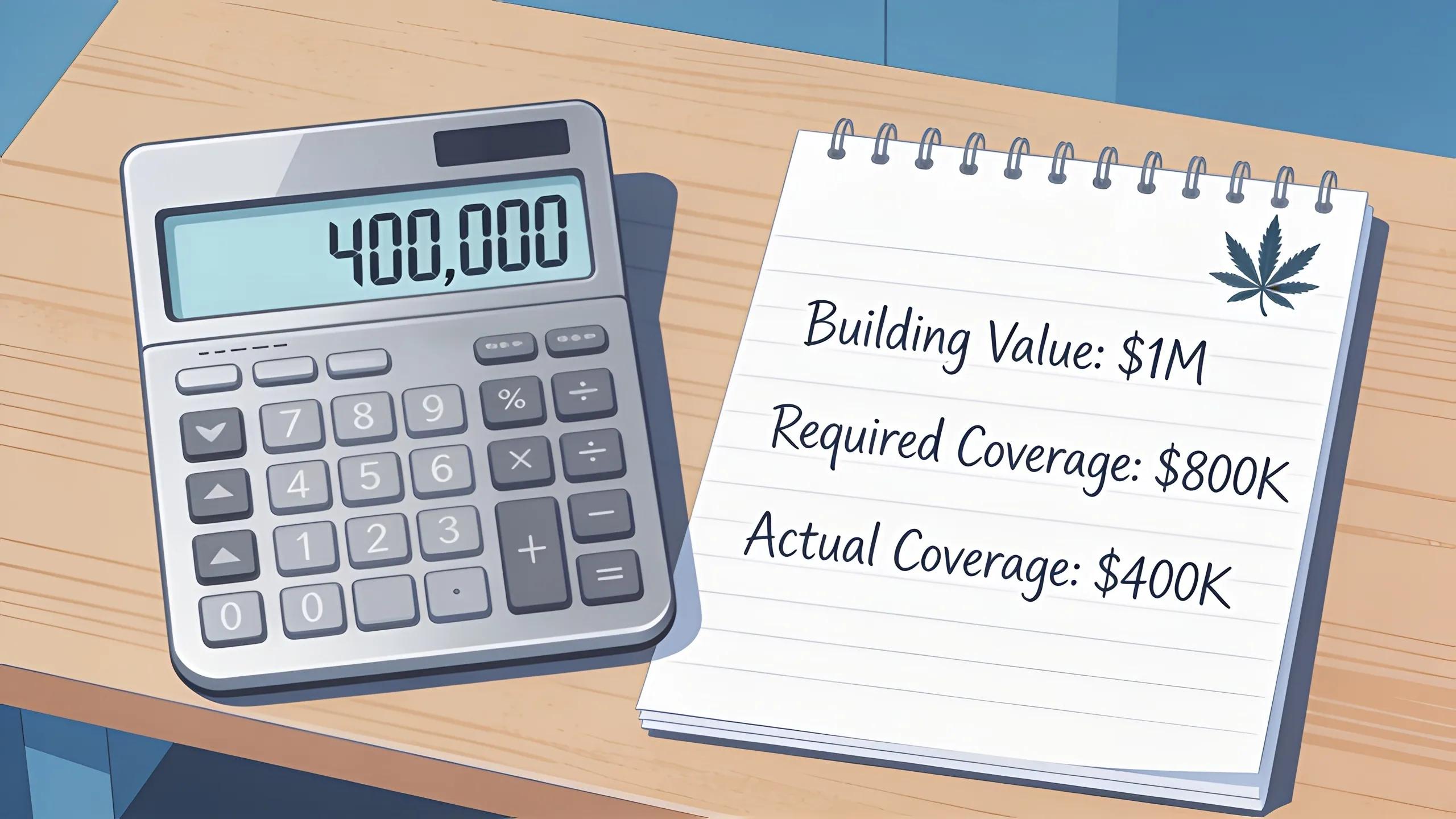
Visual representation of coinsurance penalty calculation for cannabis property insurance

Calculating the coinsurance penalty involves understanding the coinsurance percentage stipulated in the policy and the actual coverage amount. The formula can be summarized as follows:

Coinsurance Penalty Formula:

What Is the Property Insurance Coinsurance Formula?

The coinsurance formula requires the policyholder to have coverage that meets or exceeds a certain percentage of their property’s value. For instance, if a policy stipulates an 80% coinsurance requirement on a property worth $500,000, the policyholder must maintain at least $400,000 in coverage. If they only have $300,000 in insurance, any claim will be penalized due to underinsurance, thus diminishing the payout proportionately.

Can You See Example Calculations of Coinsurance Penalties?

To illustrate how coinsurance penalties work, consider a cannabis business with a property worth $1 million and a coinsurance requirement of 80%. If the business insures the property for only $600,000 and suffers a loss of $200,000, the claim would be calculated as follows:

  • Required Coverage: $800,000 (80% of $1,000,000)
  • Actual Coverage: $600,000
  • Claim Amount: $200,000

The calculation becomes:

This example highlights the importance of meeting coinsurance requirements to avoid substantial losses.

How Can Cannabis Operators Avoid Coinsurance Penalties?

Cannabis business owner consulting with an insurance expert to avoid coinsurance penalties

Cannabis operators can take specific actions to avoid coinsurance penalties and ensure they are adequately protected. Key strategies include maintaining accurate property valuations, consulting with insurance experts, and conducting regular policy reviews.

What Are Best Practices for Insurance Valuation and Coverage Adequacy?

To ensure proper coverage, cannabis operators should follow these best practices:

  1. Regular Property Assessments: Conduct assessments to accurately determine the value of assets and ensure coverage levels meet current market conditions.
  2. Consult with Experts: Engage insurance professionals who understand the cannabis industry to tailor coverage needs effectively.
  3. Update Policies Annually: Review insurance policies regularly to adjust coverage and conditions as necessary, reflecting any changes in business scope or market value.

Adhering to these best practices ensures that cannabis businesses maintain appropriate cannabis insurance compliance and avoid costly penalties associated with underinsurance.

How Does State-Specific Compliance Influence Coinsurance Requirements?

State regulations can significantly influence the coinsurance requirements for cannabis operators. Different states may impose varying minimum coverage levels or specific clauses within insurance policies. Understanding local laws is crucial for compliance and adequate protection. For instance, operators in New York must be aware of specific regulations impacting their policies. Cannabis operators must remain informed about their specific state requirements, such as those in cannabis insurance New York, to ensure they meet all necessary criteria and avoid penalties.

What Are the Risks and Trends Affecting Coinsurance Clauses for Cannabis Property Insurance in 2026?

The cannabis insurance landscape is evolving, with increasing claims and changing regulations impacting coinsurance clauses. Operators must stay abreast of these trends to manage risks effectively.

Frequently Asked Questions

What percentage of coverage does a coinsurance clause typically require?

Most property insurance policies set the coinsurance requirement between 80% and 100% of the property’s insurable value. Cannabis operators should confirm the exact percentage stated in their policy, since falling short of that threshold triggers a penalty on any claim payout.

What happens if a cannabis business is underinsured under a coinsurance clause?

If the insured amount falls below the required percentage of the property’s value, the insurer reduces the claim payout proportionally to the shortfall. This penalty applies regardless of the size of the loss, so even a small claim can be significantly underpaid if the property is underinsured.

How often should cannabis operators update their property valuations to avoid coinsurance penalties?

Property valuations should be reviewed at least annually, and sooner if the business adds equipment, expands inventory, or renovates its space. Cannabis businesses often see rapid changes in asset value, making regular assessments essential to keeping coverage aligned with actual worth.

Do coinsurance requirements vary by state for cannabis businesses?

Yes. States can impose different minimum coverage levels and compliance expectations for cannabis operators, so a policy that satisfies requirements in one state may fall short in another. Reviewing state-specific guidance, such as requirements in New York or Minnesota, helps ensure a policy stays compliant.

Who should cannabis operators consult to determine the right coverage amount?

Cannabis operators should work with insurance professionals experienced in the cannabis industry, as they understand the sector’s unique risks, high-value inventories, and regulatory requirements. An experienced agent can help set coverage levels that satisfy coinsurance requirements and reflect true property value.

Frequently Asked Questions

What percentage of coverage does a coinsurance clause typically require?

Most property insurance policies set the coinsurance requirement between 80% and 100% of the property’s insurable value. Cannabis operators should confirm the exact percentage stated in their policy, since falling short of that threshold triggers a penalty on any claim payout.

What happens if a cannabis business is underinsured under a coinsurance clause?

If the insured amount falls below the required percentage of the property’s value, the insurer reduces the claim payout proportionally to the shortfall. This penalty applies regardless of the size of the loss, so even a small claim can be significantly underpaid if the property is underinsured.

How often should cannabis operators update their property valuations to avoid coinsurance penalties?

Property valuations should be reviewed at least annually, and sooner if the business adds equipment, expands inventory, or renovates its space. Cannabis businesses often see rapid changes in asset value, making regular assessments essential to keeping coverage aligned with actual worth.

Do coinsurance requirements vary by state for cannabis businesses?

Yes. States can impose different minimum coverage levels and compliance expectations for cannabis operators, so a policy that satisfies requirements in one state may fall short in another. Reviewing state-specific guidance, such as requirements in New York or Minnesota, helps ensure a policy stays compliant.

Who should cannabis operators consult to determine the right coverage amount?

Cannabis operators should work with insurance professionals experienced in the cannabis industry, as they understand the sector’s unique risks, high-value inventories, and regulatory requirements. An experienced agent can help set coverage levels that satisfy coinsurance requirements and reflect true property value.

Frequently Asked Questions

What percentage of coverage does a coinsurance clause typically require?

Most property insurance policies set the coinsurance requirement between 80% and 100% of the property’s insurable value. Cannabis operators should confirm the exact percentage stated in their policy, since falling short of that threshold triggers a penalty on any claim payout.

What happens if a cannabis business is underinsured under a coinsurance clause?

If the insured amount falls below the required percentage of the property’s value, the insurer reduces the claim payout proportionally to the shortfall. This penalty applies regardless of the size of the loss, so even a small claim can be significantly underpaid if the property is underinsured.

How often should cannabis operators update their property valuations to avoid coinsurance penalties?

Property valuations should be reviewed at least annually, and sooner if the business adds equipment, expands inventory, or renovates its space. Cannabis businesses often see rapid changes in asset value, making regular assessments essential to keeping coverage aligned with actual worth.

Do coinsurance requirements vary by state for cannabis businesses?

Yes. States can impose different minimum coverage levels and compliance expectations for cannabis operators, so a policy that satisfies requirements in one state may fall short in another. Reviewing state-specific guidance, such as requirements in New York or Minnesota, helps ensure a policy stays compliant.

Who should cannabis operators consult to determine the right coverage amount?

Cannabis operators should work with insurance professionals experienced in the cannabis industry, as they understand the sector’s unique risks, high-value inventories, and regulatory requirements. An experienced agent can help set coverage levels that satisfy coinsurance requirements and reflect true property value.

Ready to Protect Your Cannabis Business?

Don’t leave your property exposed to coinsurance penalties. Get a quote from OG Cannabis Insurance today and work with a team that understands the unique risks cannabis operators face.

Copyright © OG Cannabis Insurance. All Rights Reserved.

img Click To Call!