OG CANNABIS INSURANCE.COM

SO. CAL’S BEST INSURANCE SERVICES, INC.

9587 Arrow Rte. Suite K
Rancho Cucamonga, CA 91730

(877) 473-7979

GET A QUOTE

Available in All Legalized States

CBD and Hemp Insurance Now Available
OG Cannabis Insurance Blog

The insurance game is an ever-changing environment, especially in the Cannabis Dispensary Insurance sector. There are a variety of different factors (e.g. cannabis laws and policies) that can affect the way your insurance works and how you and your business are covered.

The OG Cannabis Insurance blog keeps you up to date on cannabis insurance, laws and policies, and dispensary insurance news so you can be proactive on protecting yourself when the unexpected happens. We update our cannabis insurance blog regularly so check back soon for more posts!

California vs. New York Cannabis Insurance Requirements: A Comparative Guide

California vs. New York Cannabis Insurance Requirements: A Comparative Guide

California vs. New York Cannabis Insurance Requirements: Comparative Guide for Cannabis Business Insurance California and New York

By Manuel Cuaron, OG Cannabis Insurance

Navigating the intricacies of cannabis insurance requirements can be a daunting task for business owners in California and New York, especially as the regulations evolve rapidly. Both states have unique stipulations that impact the compliance landscape for cannabis operators, requiring a thorough understanding of the core insurance policies mandated in each jurisdiction. This comprehensive guide will explore the essential cannabis insurance requirements in California and New York, equipping business owners with the knowledge they need to ensure compliance and protect their investments. We will also compare the two states in terms of necessary policies, highlighting differences in coverage, compliance deadlines, and regulatory influences. Ultimately, this article aims to clarify what cannabis operators need to consider for robust insurance coverage. For a deeper understanding of how to navigate these requirements, consult this cannabis insurance compliance guide meeting state requirements.

What Are the Core Cannabis Insurance Requirements in California and New York?

In both California and New York, cannabis businesses must adhere to specific insurance requirements to remain compliant with state laws. These core requirements provide a framework for protecting business assets, employees, and the public. Specifically, the mandatory insurance types include:

  1. General Liability Insurance: Protects businesses from third-party claims involving bodily injury or property damage.
  2. Product Liability Insurance: Essential for cannabis products, this insurance covers claims related to product defects or harmful effects caused by consumed goods.
  3. Workers’ Compensation: This is critical for businesses with employees, covering medical expenses and lost wages for workers injured on the job.

Understanding the nuances of these requirements in both states is crucial for cannabis operators to avoid penalties or loss of business licenses. As businesses prepare to meet these requirements, comprehensive cannabis insurance coverage can help facilitate compliance while focusing on business growth.

Which Types of Insurance Are Mandatory for California Cannabis Businesses?

California cannabis businesses face a variety of mandatory insurance types designed to protect against potential risks associated with the industry.

  1. General Liability Insurance: This insurance is required to protect against claims of bodily injury and property damage, which can arise from daily operations.
  2. Workers’ Compensation: Required by state law, this coverage protects employees injured on the job, covering their medical expenses and lost wages.
  3. Product Liability Insurance: Mandatory for any cannabis company, this insurance is crucial to cover claims relating to the safety and efficacy of cannabis products sold to consumers.

Each of these policies serves to shield both business owners and consumers from potential financial harm, fostering a safer operational environment.

What Insurance Policies Does New York Require for Cannabis Operators?

Similar to California, New York mandates specific insurance policies that cannabis operators must obtain to comply with local regulations. If you’re operating in the Empire State, understanding the specific nuances of New York cannabis insurance is paramount.

  1. General Liability Insurance: This coverage is essential in protecting against lawsuits claiming bodily injury or property damage.
  2. Product Liability Insurance: Given the nature of the cannabis industry, this insurance is vital for covering any product-related claims concerning harm to consumers.
  3. Workers’ Compensation: New York law requires this insurance for all businesses with employees, ensuring protection for employees if they sustain injuries during work.

Ensuring appropriate coverage is critical for cannabis operators in New York, helping them mitigate legal risks while adhering to state mandates.

How Do California and New York Cannabis Insurance Regulations Differ?

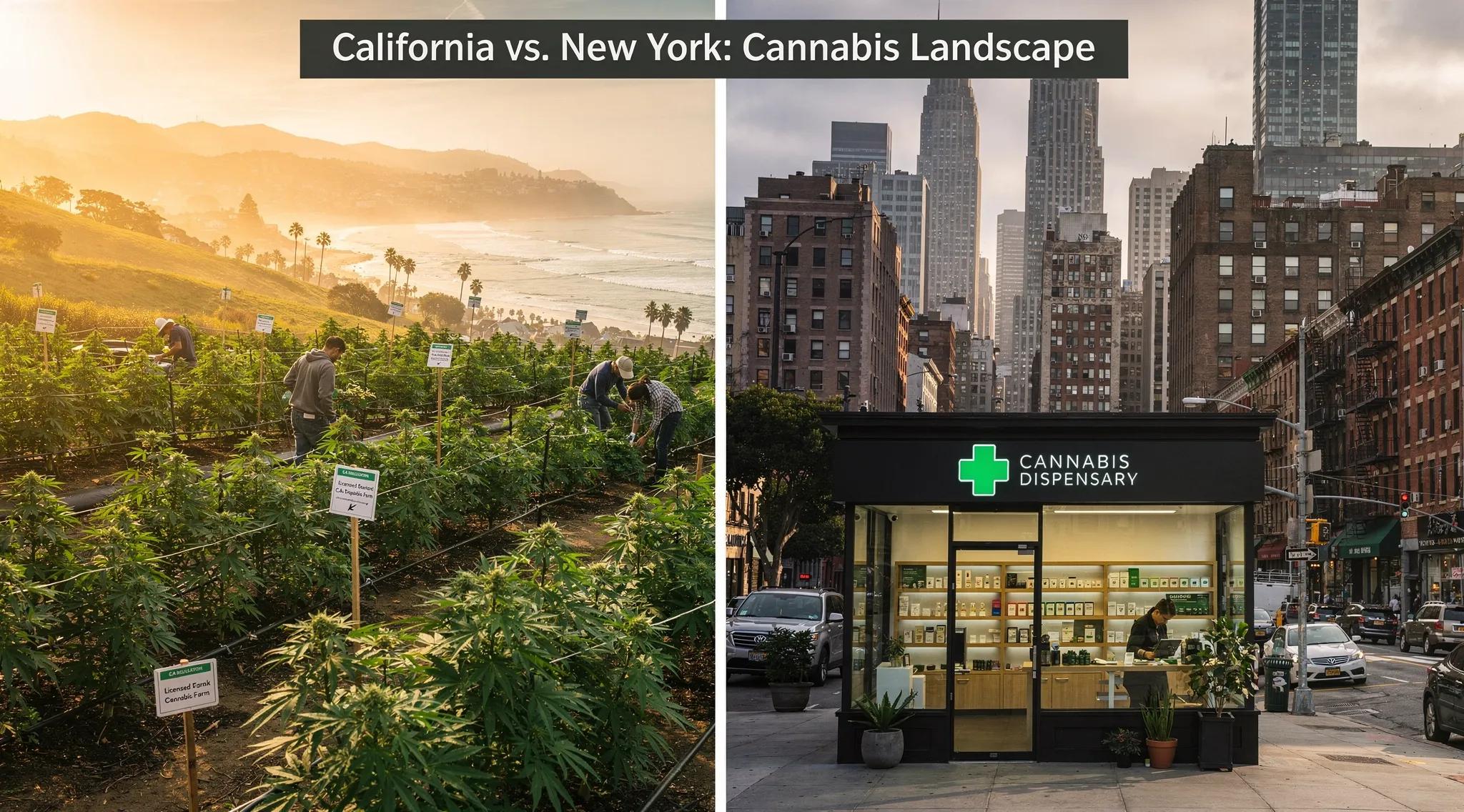
Comparison of cannabis regulations in California and New York

The regulations surrounding cannabis insurance in California and New York differ significantly, reflective of the distinct approaches each state takes towards cannabis legislation.

  1. Regulatory Agencies: California’s cannabis operations are overseen by multiple agencies, including the Department of Cannabis Control, while New York’s laws are primarily enforced by the Office of Cannabis Management.
  2. Coverage Limits: Each state sets different minimum coverage limits. For instance, California often requires higher liability limits compared to New York.
  3. Specific Regulatory Requirements: For example, California requires cannabis businesses to disclose certain risks associated with their operations, which affects insurance reporting and claims.

These differences mean operators must carefully tailor their insurance policies according to their specific state regulations, emphasizing compliance to avoid penalties.

What Are the Key Differences in Coverage Minimums and Compliance Deadlines?

Understanding the differences in coverage minimums and compliance deadlines is crucial for cannabis businesses operating in California and New York.

  1. Coverage Minimums: California generally imposes higher minimum coverage limits than New York, which could affect premiums and overall operational costs for businesses.
  2. Compliance Deadlines: Businesses in California may face tighter deadlines for submitting proof of insurance coverage compared to those in New York.
  3. Adjustments Due to Regulatory Changes: Both states have provisions for adjusting coverage requirements based on evolving laws and market conditions.

Tracking these elements is essential for businesses to ensure ongoing compliance with insurance regulations.

How Do State Regulatory Authorities Impact Insurance Policy Requirements?

State regulatory authorities play a significant role in shaping the insurance policy requirements for cannabis businesses.

  1. Policy Guidelines: Regulatory agencies issue guidelines on the types of insurance necessary based on operational risks identified within the industry.
  2. Compliance Oversight: These authorities regularly review businesses to ensure compliance with insurance requirements, which can lead to penalties for non-compliance.
  3. Adjusting Requirements: Agencies have the ability to adjust insurance requirements based on emerging risks or changes in law, emphasizing the dynamic nature of cannabis compliance.

Businesses must stay informed about regulatory updates to adapt their insurance policies accordingly.

Which Cannabis Insurance Types Should Business Owners Consider in Both States?

When considering insurance coverage, cannabis business owners should evaluate several essential types:

  1. General Liability Insurance: This fundamental coverage is vital for protecting against third-party claims.
  2. Product Liability Insurance: Given the potential for product-related claims, this coverage is crucial for all operators.
  3. Environmental Liability Insurance: Particularly important for cultivators, this policy protects against liabilities arising from cultivation processes and their environmental impacts.

These types of insurance are significant investments for cannabis businesses aiming to safeguard their operations against unforeseen risks.

What Are the Benefits of General, Product, and Crop Liability Insurance for Cannabis Businesses?

Understanding the benefits of various liability insurances can help business owners make informed decisions regarding their coverage.

  1. General Liability Insurance: Provides financial protection against claims that could potentially close a business, ensuring long-term viability.
  2. Product Liability Insurance: Essential for preserving a company’s reputation, this insurance mitigates the financial fallout from any claims regarding product safety.
  3. Crop Liability Insurance: This insurance helps protect growers against crop loss, which can occur due to natural disasters or pest infestations.

Together, these insurances form a robust safety net for cannabis businesses, allowing them to focus on their operational growth.

How Does Dispensary Liability Insurance Compare Between California and New York?

Dispensary liability insurance varies between California and New York, primarily in criteria for coverage and costs incurred. For startups, securing the right insurance from the outset is crucial, and understanding cannabis insurance for startups can provide essential coverage for new license holders.

  1. Premium Costs: Dispensaries in California often face higher insurance premiums due to the extensive regulations and higher risk factors associated with the large market size.
  2. Coverage Requirements: California may have more nuanced requirements that dictate specific coverage amounts depending on the size and scope of the dispensary’s operations.
  3. Claims Processing: The manner in which claims are processed may differ between states, with California offering a more streamlined approach for larger dispensaries.

It is crucial for dispensary owners to comprehend these distinctions to ensure they acquire adequate and compliant coverage.

What Are Practical Compliance Tips for Cannabis Businesses Navigating Insurance in California and New York?

Cannabis business owners discussing compliance tips and insurance

Navigating the complexities of cannabis insurance compliance can be challenging; however, the following tips can help:

  1. Stay Informed: Regularly review updates from state regulatory agencies to stay abreast of changes in insurance requirements.
  2. Consult Insurance Experts: Engage with insurance professionals who specialize in cannabis insurance to tailor coverage to your specific needs.
  3. Document Everything: Maintain thorough records of all insurance documents and correspondence with providers to ensure compliance during audits.

These practical steps can help cannabis businesses effectively manage their insurance obligations and avoid penalties.

How Can Cannabis Operators Ensure Ongoing Insurance Compliance in California?

In California, cannabis operators can maintain insurance compliance through several proactive measures:

  1. Conduct Regular Audits: Frequent reviews of insurance policies can ensure that coverage remains adequate and compliant with evolving regulations.
  2. Keep Up with Legislative Changes: Actively monitor changes in laws that may affect insurance requirements and adjust coverage accordingly.
  3. Engage with Legal Counsel: Consulting legal advisors familiar with cannabis regulations can aid in understanding compliance obligations.

These strategies not only help ensure compliance but also enhance operational security.

What Steps Should New York Cannabis Businesses Take to Maintain Regulatory Insurance Coverage?

New York cannabis businesses can take specific steps to ensure regulatory insurance coverage is maintained effectively:

  1. Set Up Reminders for Renewals: Establishing a calendar for renewals can prevent lapses in coverage that jeopardize compliance.
  2. Regular Consultations with Insurance Providers: Frequent interactions with your insurance provider can highlight necessary adjustments based on business changes or regulatory shifts.
  3. Document All Communications: Keeping a detailed record of all correspondence regarding insurance can be invaluable for compliance verification.

Following these steps helps safeguard New York cannabis businesses from potential compliance pitfalls.

Copyright © OG Cannabis Insurance. All Rights Reserved.

img Click To Call!