OG CANNABIS INSURANCE.COM

SO. CAL’S BEST INSURANCE SERVICES, INC.

9587 Arrow Rte. Suite K
Rancho Cucamonga, CA 91730

(877) 473-7979

GET A QUOTE

Available in All Legalized States

CBD and Hemp Insurance Now Available

OG Cannabis Insurance Blog

The insurance game is an ever-changing environment, especially in the Cannabis Dispensary Insurance sector. There are a variety of different factors (e.g. cannabis laws and policies) that can affect the way your insurance works and how you and your business are covered.

The OG Cannabis Insurance blog keeps you up to date on cannabis insurance, laws and policies, and dispensary insurance news so you can be proactive on protecting yourself when the unexpected happens. We update our cannabis insurance blog regularly so check back soon for more posts!

Navigating Cannabis Manufacturing Risks: Essential Insights

Navigating Cannabis Manufacturing Risks: Essential Insights for Safety, Compliance, and Quality

Cannabis manufacturing risks encompass operational, product, regulatory, supply chain, environmental, insurance, and strategic control challenges that threaten safety, compliance, and product integrity. This guide delivers actionable solutions to identify hazards, prevent contamination, navigate evolving regulations, secure business continuity, minimize environmental impact, select appropriate insurance coverages, and implement robust mitigation strategies. You will learn:

  • Key operational safety hazards and prevention protocols
  • Product quality threats and contamination controls
  • Regulatory and legal compliance complexities
  • Supply chain resilience and continuity planning
  • Environmental sustainability risks and resource management
  • Essential insurance and risk transfer solutions
  • Comprehensive risk mitigation and compliance frameworks

By exploring each risk category—from fire and mold to federal licensing and disaster recovery—you’ll gain practical insights to protect facilities, workers, and consumers while ensuring consistent, high-quality cannabis products.

What Are the Key Operational Safety Hazards in Cannabis Manufacturing?

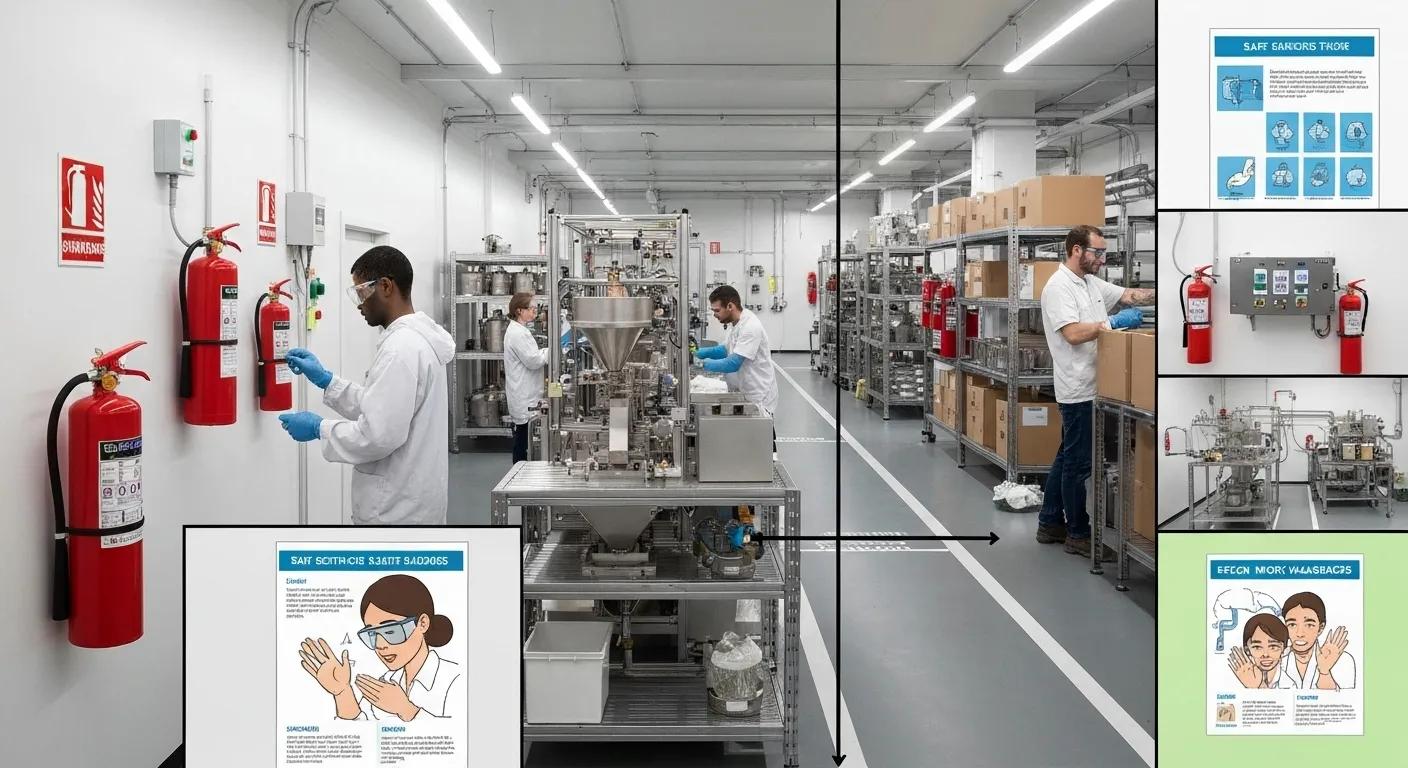
Operational safety hazards in cannabis manufacturing with safety equipment and practices

Operational safety hazards in cannabis manufacturing arise when processes expose workers and facilities to physical, chemical, and security threats that can cause injury, downtime, or financial loss. For example, solvent-based extraction methods can ignite if controls fail, underscoring the need for rigorous hazard identification and prevention measures.

How Do Fire and Explosion Risks Impact Cannabis Extraction Facilities?

Fire and explosion risks in extraction stem from flammable solvents such as butane or ethanol that can ignite under improper ventilation or equipment malfunction.

  1. Install explosion-proof ventilation to remove solvent vapors before ignition.
  2. Implement gas-detection sensors that trigger automatic shutdowns.
  3. Train staff on safe solvent handling and emergency response procedures.

Fire and Explosion Risks in Extraction Facilities

Extraction facilities face significant fire and explosion risks due to flammable solvents like butane and ethanol. Implementing explosion-proof ventilation, gas-detection sensors, and comprehensive staff training are crucial for mitigating these hazards and ensuring operational safety.

National Fire Protection Association (NFPA), “NFPA 55: Compressed Gases and Cryogenic Fluids Code” (2023)

This code provides detailed guidelines for the safe handling of flammable materials, directly supporting the article’s recommendations for fire safety in cannabis manufacturing.

Effective hazard controls reduce property damage and workplace injuries while maintaining uninterrupted production. Transitioning from fire safety to electrical protocols further strengthens overall operational resilience.

What Electrical Safety Protocols Are Essential for Cannabis Grow Operations?

Electrical safety protocols safeguard cultivation facilities against shock, arc flash, and wiring failures that can spark fires or injure workers.

  • Design power distribution with Ground Fault Circuit Interrupters (GFCIs) to prevent shocks.
  • Conduct regular infrared inspections to detect hot spots in panels and motors.
  • Label circuits clearly and lock out/tag out (LOTO) before maintenance.

These measures ensure reliable power delivery and protect personnel, setting the stage for addressing ergonomic and physical hazards next.

Which Ergonomic and Physical Hazards Affect Cannabis Workers?

Cannabis workers face ergonomic and physical hazards such as repetitive strain injuries, heavy lifting, and slip risks in wet environments.

  1. Provide adjustable workstations to minimize bending and wrist strain.
  2. Use mechanical hoists or trolleys for moving heavy harvest bins.
  3. Apply anti-fatigue mats to reduce lower-limb fatigue during long shifts.

Ergonomic improvements enhance productivity and reduce injury rates, leading naturally into strategies for preventing workplace violence.

How Can Workplace Violence Be Prevented in Cannabis Businesses?

Preventing workplace violence requires security protocols, staff training, and environmental design to deter theft-motivated confrontations.

  • Install access control systems with badge readers at entry points.
  • Offer de-escalation training and clear reporting procedures for suspicious behavior.
  • Position surveillance cameras to cover high-risk areas such as cash handling stations.

A secure workplace fosters employee well-being and aligns with quality and contamination risk management.

How Do Product Quality and Contamination Risks Affect Cannabis Manufacturing?

Laboratory testing for product quality and contamination in cannabis manufacturing

Product quality and contamination risks undermine consumer safety and brand reputation when biological, chemical, or heavy-metal hazards infiltrate cannabis products. For instance, mold growth in cultivation rooms can force costly product recalls and regulatory penalties.

Contaminant TypePrimary AttributeMitigation Strategy
MoldBiological hazardHygrometer-based humidity control
Pesticide residueChemical contaminantAccredited lab testing
Heavy metalsToxic elementSource water and soil analysis
Microbial pathogensHealth riskHEPA filtration and sanitization

This table highlights critical contamination types and controls, illustrating how Good Manufacturing Practices (GMP) further reinforce product consistency and potency.

What Are Effective Mold Prevention and Remediation Techniques in Cannabis Cultivation?

Mold prevention relies on controlling humidity, airflow, and surface cleanliness to inhibit fungal spores from colonizing plant material.

  1. Maintain 40–50% relative humidity using dehumidifiers and HVAC zoning.
  2. Employ positive-pressure air locks at grow-room entrances.
  3. Sanitize equipment and attachments with approved biocides between harvests.

Proactive environmental controls stop mold before it spreads, setting up the next step of pesticide management.

How Is Pesticide Contamination Tested and Controlled in Cannabis Products?

Testing for pesticide contamination involves validated analytical methods such as liquid chromatography-mass spectrometry (LC-MS) to detect residue levels against regulatory action limits.

  • Collect representative samples from each batch.
  • Use accredited third-party laboratories for method validation.
  • Implement integrated pest management (IPM) to minimize chemical applications.

Accurate testing and IPM strategies ensure compliance with safety thresholds and product integrity, leading into heavy-metal risk mitigation.

What Are the Risks of Heavy Metal Contamination and How Can They Be Mitigated?

Heavy metal contamination arises from uptake of elements like lead, cadmium, and arsenic from soil or irrigation water, posing neurological and developmental risks to consumers.

  • Source cultivation media tested for baseline metal levels.
  • Install reverse-osmosis water filtration systems.
  • Rotate crops and use phyto-stabilizing plants to remediate contaminated soils.

Preventive sourcing and remediation reduce heavy-metal uptake, which dovetails with GMP’s role in consistency and potency control.

How Does Good Manufacturing Practice (GMP) Ensure Cannabis Product Consistency and Potency?

Good Manufacturing Practice (GMP) is a quality-assurance framework that documents every production step to guarantee batch-to-batch uniformity, precise cannabinoid profiles, and contaminant avoidance.

  • Enforce standard operating procedures (SOPs) for cultivation, extraction, and packaging.
  • Monitor environmental parameters continuously with calibrated sensors.
  • Conduct in-process and finished-product testing to validate potency and purity.

Good Manufacturing Practices (GMP) in Cannabis

Good Manufacturing Practices (GMP) are essential for ensuring consistent product quality and potency in cannabis manufacturing. GMP involves documenting every production step, monitoring environmental parameters, and conducting rigorous testing to validate purity and cannabinoid profiles.

World Health Organization (WHO), “Good Manufacturing Practices: Supplementary Guidelines for the Manufacture of Herbal Medicines” (2006)

This WHO guideline provides a framework for GMP, which is applicable to cannabis manufacturing processes, as it emphasizes the importance of quality control and standardization.

GMP’s rigorous controls create robust product quality systems, paving the way to address regulatory and legal compliance challenges.

What Are the Major Regulatory and Legal Compliance Challenges in Cannabis Manufacturing?

Regulatory and legal compliance challenges stem from overlapping state and federal statutes, complex licensing requirements, product liability exposure, and specialized tax regulations that can halt operations or incur severe penalties.

How Do State and Federal Cannabis Regulations Impact Manufacturing Operations?

State cannabis regulations vary on licensing, testing, packaging, and traceability, while federal illegality restricts banking, interstate commerce, and research funding.

  • Maintain dual compliance by mapping state rules into internal audit checklists.
  • Use seed-to-sale tracking systems to satisfy traceability mandates.
  • Secure specialized financial services that comply with federal banking guidelines.

Understanding varied jurisdictions guides manufacturers toward integrated compliance roadmaps and mitigates licensing risks next.

What Are the Licensing and Permitting Risks for Cannabis Manufacturers?

Licensing and permitting risks include application rejection, renewal delays, and noncompliance fines when documentation or facility inspections fall short of regulatory standards.

  1. Prepare comprehensive facility design plans aligned with local zoning and safety codes.
  2. Document all SOPs, training records, and quality-control protocols for inspection readiness.
  3. Engage regulatory consultants to anticipate application pitfalls and expedite renewals.

Proactive preparation lowers the probability of permit denials, and informs strategies for managing product liability.

How Is Product Liability Managed Within the Cannabis Industry?

Product liability in cannabis involves defending against claims of contamination, mislabeling, or adverse health effects, with litigation risk mitigated by traceability and insurance coverage.

  • Implement batch-level tracking to trace affected lots swiftly.
  • Maintain certificate-of-analysis (COA) records for every shipment.
  • Secure product liability insurance with recall coverage for rapid crisis response.

Strong liability controls underpin financial stability and link directly to tax compliance considerations.

What Are the Tax Compliance and Financial Regulations Affecting Cannabis Businesses?

Cannabis businesses face specialized tax codes such as IRC Section 280E that disallows standard business expense deductions, plus state excise taxes and complex reporting requirements.

  • Employ specialized accountants versed in 280E to optimize allowable deductions.
  • Automate tax calculations through integrated ERP systems.
  • Allocate reserves for variable state excise rates and potential audits.

Financial compliance strategies safeguard cash flow and prepare enterprises for supply chain resilience planning.

How Can Supply Chain and Business Continuity Risks Be Managed in Cannabis Manufacturing?

Supply chain and continuity risks include raw-material shortages, theft, cyberattacks, and disaster events that disrupt production and distribution pipelines.

Supply Chain EntityKey RiskMitigation Measure
Raw Material SuppliersCrop failureDiversify vendor network
Transportation & LogisticsDelayed deliveriesReal-time tracking and alternative routes
Inventory StorageTheft and diversionSecure vaults and 24/7 surveillance
IT InfrastructureCybersecurity breachNetwork segmentation and encryption

This table connects supply chain entities with targeted risk controls, leading into specific security and recovery protocols.

What Strategies Mitigate Supply Chain Disruptions in Cannabis Production?

Mitigation strategies for supply chain disruptions rely on vendor diversification, safety stock management, and real-time monitoring to maintain continuous production.

  • Establish multiple vetted suppliers for key inputs like substrates and packaging.
  • Maintain buffer inventories of critical components.
  • Implement IoT-enabled asset tracking for end-to-end visibility.

These supply chain safeguards strengthen security measures for cannabis inventory and facilities.

How Are Theft and Security Risks Addressed for Cannabis Inventory and Facilities?

Theft and security risks are controlled by layered physical and electronic safeguards, from perimeter barriers to digital access controls.

  1. Erect perimeter fencing with anti-climb features.
  2. Deploy intrusion detection systems integrated with local law enforcement alerts.
  3. Use biometric access to limit entry to high-value storage rooms.

A multi-layered security posture reduces loss exposure and transitions into addressing cybersecurity threats.

What Cybersecurity Threats Are Unique to the Cannabis Industry?

Cybersecurity threats such as targeted ransomware, data breaches of seed-to-sale systems, and unauthorized access to intellectual-property assets jeopardize operational integrity and compliance data.

  • Apply role-based access control (RBAC) to critical systems.
  • Encrypt sensitive data both at rest and in transit.
  • Conduct regular penetration testing and staff phishing simulations.

Cybersecurity Threats in Cannabis Industry

The cannabis industry faces unique cybersecurity threats, including ransomware attacks, data breaches, and unauthorized access to intellectual property. Implementing role-based access control, data encryption, and regular penetration testing are vital for protecting operational integrity and compliance data.

National Institute of Standards and Technology (NIST), “Cybersecurity Framework” (2018)

The NIST Cybersecurity Framework offers a comprehensive approach to managing cybersecurity risks, which is directly relevant to the article’s discussion of protecting digital assets in cannabis businesses.

Digital defenses complement disaster recovery planning, ensuring fast restoration of operations after disruptions.

How Should Cannabis Businesses Prepare for Business Interruption and Disaster Recovery?

Business interruption planning combines emergency response, backup systems, and recovery playbooks to minimize downtime after events like fires, floods, or cyberattacks.

  • Develop and rehearse an incident response plan covering evacuation, data restoration, and stakeholder communication.
  • Implement off-site backups of critical data and replicate key equipment.
  • Establish mutual-aid agreements with industry partners for resource sharing.

A tested disaster recovery plan closes continuity gaps and sets the stage for tackling environmental and sustainability risks.

What Environmental and Sustainability Risks Affect Cannabis Cultivation and Manufacturing?

Environmental and sustainability risks arise from high energy and water usage, improper waste disposal, and volatile organic compound (VOC) emissions that can trigger regulatory fines and community opposition.

How Does Energy Consumption Influence the Carbon Footprint of Cannabis Production?

Energy consumption—driven by lighting, HVAC, and extraction equipment—significantly contributes to greenhouse gas emissions and operational costs.

  • Install LED lighting systems optimized for photosynthetic efficiency.
  • Use variable-frequency drives (VFDs) on HVAC compressors to reduce power draw.
  • Purchase renewable energy credits or install on-site solar panels.

Lowering energy intensity reduces both carbon footprint and utility expenses, leading into sustainable water management.

What Are Best Practices for Water Usage and Wastewater Management in Cannabis Facilities?

Water usage and wastewater management require precision irrigation, recirculation systems, and proper disposal to conserve resources and meet discharge regulations.

  1. Employ drip irrigation and moisture sensors to eliminate overwatering.
  2. Capture and reuse condensate from dehumidifiers.
  3. Treat effluent in constructed wetlands or biological reactors before release.

Efficient water strategies curb operational costs and integrate seamlessly with waste management requirements.

How Are Waste Management and Disposal Regulations Enforced in Cannabis Businesses?

Waste management regulations mandate secure disposal of biomass, solvents, and packaging materials to prevent diversion and environmental contamination.

  • Segregate organic waste in sealed, labeled containers for composting or incineration.
  • Collect spent solvents in DOT-compliant drums and partner with certified waste haulers.
  • Recycle or shred packaging to comply with local recycling ordinances.

Compliance with waste regulations aligns with VOC-emission controls that follow.

What Are the Effects of Air Quality and VOC Emissions in Cannabis Operations?

VOC emissions from terpenes and solvents can degrade local air quality and attract regulatory penalties when uncontrolled.

  • Install activated-carbon scrubbers to capture terpene vapors.
  • Deploy continuous VOC monitors to verify emission limits.
  • Insulate and seal extraction rooms to prevent fugitive leaks.

Effective VOC management protects worker health and satisfies environmental permit requirements, preparing manufacturers for essential insurance solutions.

What Types of Insurance and Risk Transfer Solutions Are Essential for Cannabis Manufacturers?

Cannabis manufacturers require specialized insurance policies to transfer financial risks associated with property damage, product liability, crop loss, and workplace injuries—coverages that traditional markets often exclude.

Insurance PolicyCoverage AttributeKey Benefit
Property InsuranceFacility damage protectionRepair or replacement costs
Product Liability InsuranceContamination recall coverLegal defense and recall expenses
Crop InsurancePlant loss coverageCompensation for destroyed yields
Workers’ Compensation InsuranceEmployee injury protectionMedical bills and wage replacement

This EAV table clarifies essential insurance solutions and their value in transferring core cannabis manufacturing risks.

Which Insurance Policies Are Critical for Cannabis Manufacturing Facilities?

Critical insurance policies for cannabis facilities include property, general liability, product liability with recall endorsements, and crop coverage to safeguard against diverse operational losses.

  • Property insurance reimburses for fire or flood damage to buildings and equipment.
  • Product liability insurance covers claims arising from contamination or mislabeling.
  • Crop insurance compensates growers after natural disasters or pest outbreaks.

These policies anchor financial resilience ahead of product-recall insurance specifics.

How Does Cannabis Product Recall Insurance Protect Against Contamination Risks?

Product recall insurance provides rapid funds and professional support to manage contaminated product withdrawals, reducing legal exposure and reputational harm.

  • Covers recall logistics, public relations, and legal defense costs.
  • Facilitates rapid consumer notifications and retrieval of affected lots.
  • Supports replacement or refund programs to maintain customer trust.

Recall insurance complements workers’ compensation and employee benefit considerations next.

What Are the Workers’ Compensation and Employee Benefits Considerations in Cannabis?

Workers’ compensation and benefits in cannabis must address the unique hazards of cultivation and processing, offering medical coverage, wage replacement, and preventive wellness programs.

  • Tailor benefit plans to include stress management and ergonomic support.
  • Implement safety incentive programs that reward low injury rates.
  • Secure customized coverage recognizing extraction and cultivation hazards.

A comprehensive benefits package reinforces organizational safety culture and dovetails into overall risk mitigation strategies.

How Can Cannabis Manufacturers Implement Effective Risk Mitigation and Compliance Strategies?

Effective risk mitigation and compliance strategies integrate safety protocols, quality management, regulatory adherence, and advanced technologies to create resilient operations and sustainable growth.

What Are Proven Safety Protocols to Prevent Fire, Mold, and Chemical Hazards?

Proven safety protocols combine engineering controls, administrative procedures, and personal protective equipment (PPE) to guard against fire, mold, and chemical exposures.

  1. Enforce regular equipment inspections and maintenance logs.
  2. Use humidity and gas sensors with automated alarms.
  3. Provide PPE—respirators, gloves, flame-resistant clothing—and training on proper use.

Rigorous protocols establish a culture of safety that naturally extends into GMP compliance.

How Can GMP Compliance Be Maintained Across Cannabis Manufacturing Processes?

Maintaining GMP compliance requires continuous monitoring, documentation, and staff competency to uphold product quality and traceability from seed to sale.

  • Conduct routine internal audits against SOP checklists.
  • Use electronic batch records to capture process data in real time.
  • Certify personnel through periodic GMP training and proficiency assessments.

These practices reinforce documentation discipline and align with regulatory compliance and documentation best practices.

What Are Best Practices for Navigating Regulatory Compliance and Documentation?

Best practices for regulatory compliance involve proactive policy tracking, digital recordkeeping, and stakeholder communication to meet evolving rules.

  • Subscribe to state and federal regulatory updates and integrate changes into quality manuals.
  • Store inspection reports, COAs, and license documents in secure, version-controlled repositories.
  • Communicate updates and audit findings across departments through centralized portals.

Clear documentation workflows support technology-driven risk detection and prevention in the final step.

How Can Technology Enhance Risk Detection and Prevention in Cannabis Facilities?

Technology solutions—IoT sensors, AI analytics, and blockchain traceability—offer real-time insights to detect anomalies, predict failures, and secure supply chain data.

  • Deploy environmental sensors integrated with AI to flag deviations instantly.
  • Use blockchain to create immutable seed-to-sale logs for compliance audits.
  • Implement predictive maintenance platforms that schedule equipment servicing before failures occur.

Harnessing technology elevates risk management from reactive to predictive, ensuring a safer, compliant, and more efficient cannabis manufacturing environment.

Cannabis manufacturers that adopt comprehensive safety protocols, rigorous quality systems, and advanced compliance technologies will achieve durable operational resilience. By integrating insurance protections, environmental stewardship, and strategic continuity planning, facilities can navigate the evolving regulatory landscape while delivering safe, high-quality products. A proactive, data-driven approach to risk identification and mitigation empowers stakeholders to maintain compliance, protect investments, and uphold consumer trust in a competitive market. Continuous improvement and innovation remain essential to mastering cannabis manufacturing risks and sustaining long-term success.

Copyright © OG Cannabis Insurance. All Rights Reserved.

img Click To Call!