OG CANNABIS INSURANCE.COM

SO. CAL’S BEST INSURANCE SERVICES, INC.

9587 Arrow Rte. Suite K
Rancho Cucamonga, CA 91730

(877) 473-7979

GET A QUOTE

Available in All Legalized States

CBD and Hemp Insurance Now Available

OG Cannabis Insurance Blog

The insurance game is an ever-changing environment, especially in the Cannabis Dispensary Insurance sector. There are a variety of different factors (e.g. cannabis laws and policies) that can affect the way your insurance works and how you and your business are covered.

The OG Cannabis Insurance blog keeps you up to date on cannabis insurance, laws and policies, and dispensary insurance news so you can be proactive on protecting yourself when the unexpected happens. We update our cannabis insurance blog regularly so check back soon for more posts!

Colorado Cannabis Insurance Requirements & Coverage Options

Colorado Cannabis Insurance: CO-MED License Requirements & Coverage | OG Cannabis Insurance

Colorado stands as a pioneering state in the cannabis industry, having legalized recreational cannabis through Amendment 64 in 2012, the first state in the United States to do so. This groundbreaking legislation set the stage for a regulated cannabis market overseen by the Colorado Marijuana Enforcement Division (MED), commonly referred to as CO-MED, a division under the Colorado Department of Revenue. For cannabis businesses operating in Colorado, understanding and complying with CO-MED’s licensing requirements and state laws related to insurance is essential to maintain legal operations and protect against the unique risks inherent in this industry.

This comprehensive guide from OG Cannabis Insurance provides an authoritative overview of Colorado’s cannabis insurance landscape, detailing the insurance coverages relevant to cannabis businesses, license-specific considerations, cost expectations, and the importance of working with a specialist broker. Whether you operate a retail store, cultivation facility, manufacturer, or delivery service, this guide will equip you with the knowledge needed to secure appropriate insurance coverage and remain compliant with CO-MED regulations and Colorado state law.

CO-MED Cannabis Insurance Requirements and Colorado State Law

The Colorado Marijuana Enforcement Division (CO-MED) regulates cannabis licensing and enforces compliance with state cannabis laws. However, it is important to clarify that CO-MED does not mandate general liability insurance at the state licensing level for cannabis businesses. Instead, insurance requirements such as workers’ compensation and commercial auto insurance are governed by Colorado state law, not CO-MED regulations.

Colorado’s approach differs from other states like New Jersey, Massachusetts, and Michigan, where cannabis regulatory agencies explicitly require general liability insurance as part of licensing. In Colorado, while CO-MED does not impose a general liability insurance mandate, many cannabis businesses choose to carry it as a best practice to manage risk and meet contractual obligations with landlords, vendors, and financial institutions.

Mandatory Insurance Coverages and Legal Requirements

  • General Liability Insurance: Not mandated by CO-MED at the state licensing level. However, it is widely recommended for cannabis businesses to protect against third-party claims involving bodily injury or property damage related to business operations.
  • Product Liability Insurance: Required specifically for Marijuana Infused Products (MIP) manufacturers. This coverage addresses claims related to the safety and quality of cannabis products, including potential harm caused by defects or contamination.
  • Workers’ Compensation Insurance: Required by Colorado state law for any cannabis business employing staff. This insurance covers medical expenses and lost wages for employees injured on the job and is enforced by the Colorado Department of Labor and Employment, not CO-MED.
  • Hired and Non-Owned Auto (HNOA) Insurance: Delivery and transport operators must maintain appropriate commercial auto insurance, including HNOA coverage, as required by Colorado state law. This coverage protects against liability arising from the use of vehicles not owned by the business but used for commercial cannabis delivery or transport.

Compliance with these insurance requirements is verified through state labor and transportation authorities, as well as during CO-MED licensing audits. Failure to maintain adequate insurance can result in penalties under state law and jeopardize business operations.

Additionally, Colorado Senate Bill 23-045, enacted recently, includes provisions that impact cannabis business insurance and regulatory compliance, emphasizing the importance of aligning insurance coverage with evolving state requirements.

CO-MED and METRC Seed-to-Sale Tracking

Colorado utilizes the METRC seed-to-sale tracking system to monitor cannabis products from cultivation through sale. This system supports regulatory compliance and risk management, indirectly influencing insurance underwriting by providing transparency into inventory and product movement. Insurance providers often consider METRC compliance as part of their risk assessment for cannabis businesses.

Types of Cannabis Insurance Coverage in Colorado

Cannabis businesses face a variety of risks, from product liability to property damage and employee injuries. Understanding the types of insurance coverage available helps businesses tailor their policies to their specific operational needs.

General Liability Insurance

While not mandated by CO-MED, general liability insurance is a foundational coverage that protects cannabis businesses against claims of bodily injury or property damage caused to third parties. It covers legal defense costs, settlements, and judgments. Many cannabis businesses in Colorado carry this coverage to manage risk and meet contractual requirements.

Product Liability Insurance

Especially critical for Marijuana Infused Products (MIP) manufacturers, product liability insurance covers claims arising from the use of cannabis products, including contamination, mislabeling, or adverse health effects. This coverage is essential to protect manufacturers from costly lawsuits and regulatory penalties. Colorado’s Marijuana Infused Products (MIP) manufacturers should explore cannabis manufacturer insurance coverage options designed for extractors and processors.

Workers’ Compensation Insurance

Required by Colorado state law for any business with employees, workers’ compensation insurance covers medical treatment and lost wages for employees injured during work. This coverage is vital for cannabis businesses to comply with state labor laws and protect their workforce. Enforcement and compliance are managed by the Colorado Department of Labor and Employment, not CO-MED.

Hired and Non-Owned Auto (HNOA) Insurance

Delivery and transport operators must carry HNOA insurance or commercial auto policies to cover liability risks associated with vehicles used for cannabis delivery that are not owned by the business. Standard personal auto policies do not cover commercial cannabis delivery, making these coverages mandatory under Colorado state motor vehicle laws rather than CO-MED regulations.

Property Insurance

Property insurance protects cannabis businesses against losses from theft, fire, vandalism, and natural disasters. Coverage typically includes buildings, equipment, inventory, and furnishings. While not always mandated by CO-MED, property insurance is strongly recommended to safeguard valuable assets.

Crop Insurance

Cultivation facilities face unique risks such as crop failure due to theft, fire, or environmental hazards. Although crop insurance is not a strict CO-MED requirement, it is highly recommended and often required by lenders and landlords. Crop insurance helps cultivators mitigate financial losses from unforeseen events.

METRC Inventory Theft Coverage

Colorado requires all licensees to track cannabis inventory through METRC (Marijuana Enforcement Tracking Reporting Compliance). Because every gram is tagged and traceable, insurers can now offer precise theft coverage tied to METRC records. If a break-in or internal theft occurs, the licensee can produce METRC reports showing exact quantities and strains lost, allowing for faster and more accurate claims settlements. Businesses should confirm their commercial crime or inland marine policy explicitly references METRC inventory documentation as acceptable proof of loss.

Product Recall Coverage for MIP Manufacturers

MIP manufacturers face unique recall exposure. If a batch of infused edibles or concentrates is found to contain incorrect THC dosing, contamination, or mislabeling, the licensee may be required by the MED or Colorado Department of Public Health and Environment (CDPHE) to initiate a recall. Product recall insurance covers the costs of notifying retailers and dispensaries, logistics of retrieving products, disposal costs, and any public relations expenses. Without this coverage, a single recall event can cost tens of thousands of dollars out of pocket.

Employee Dishonesty and Crime Coverage

Cannabis businesses operate largely in cash due to federal banking restrictions. This creates significant internal theft risk. Employee dishonesty coverage (a component of a commercial crime policy) protects the business if an employee steals cash from the register, skims from sales, or walks out with inventory. Coverage typically includes direct employee theft, forgery, and computer fraud. Given that many cannabis retailers handle upwards of $50,000 in weekly cash transactions, most insurers recommend crime coverage limits of at least $100,000 to $250,000.

Premises Liability

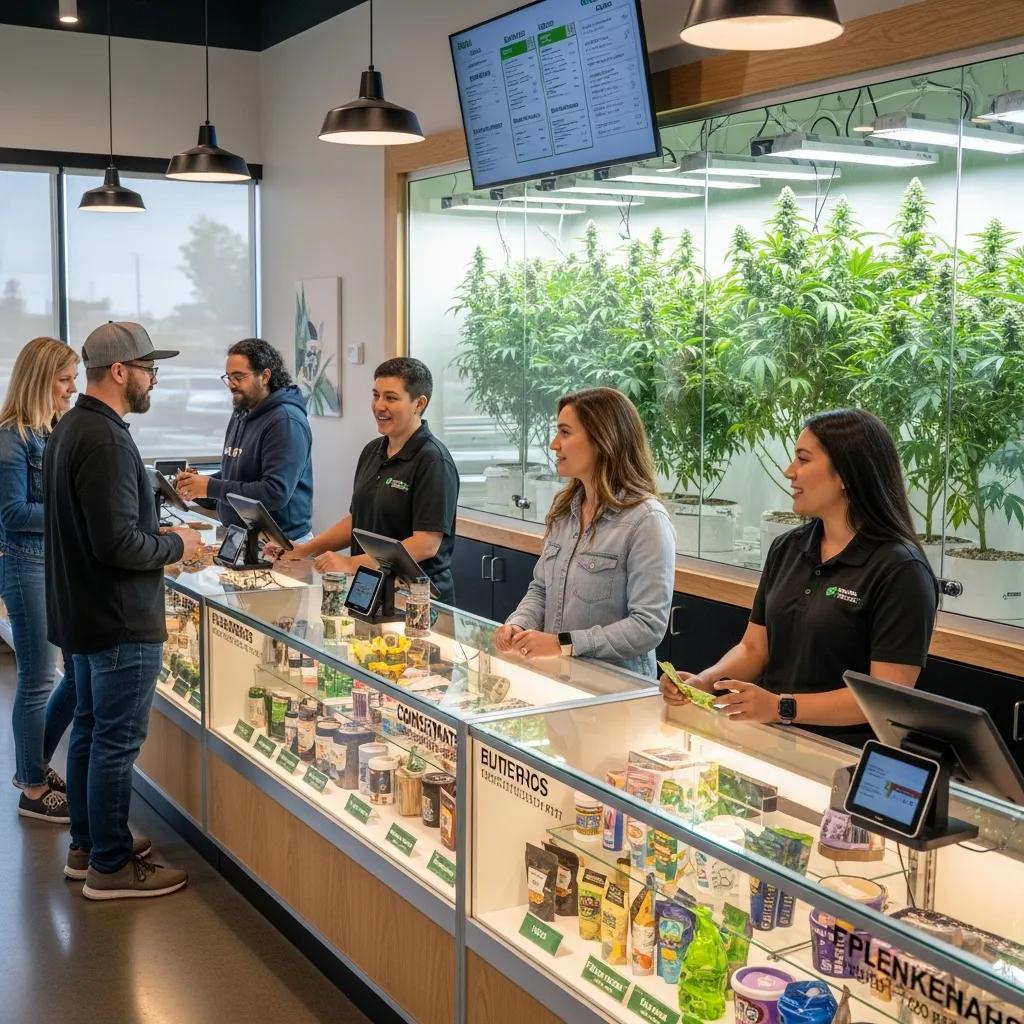
Premises liability is a subset of general liability that specifically addresses bodily injury and property damage claims arising from conditions on the business property. For cannabis retailers, this includes slip-and-fall incidents in the dispensary, injuries in the parking lot, or damages caused by a security barrier. Colorado’s cannabis retailers are open to public foot traffic, making premises liability essential. This coverage is typically included within a general liability policy but should be reviewed to ensure adequate per-occurrence limits given the volume of customer visits.

Insurance Requirements by License Type

Colorado’s cannabis licensing system includes several license types, each with distinct insurance considerations reflecting their operational risks and state law requirements.

Retail Marijuana Store

Retail Marijuana Stores typically carry the following coverages:

  • General liability insurance is recommended but not mandated by CO-MED.
  • Product liability insurance covering edibles and concentrates sold on-premise, required for MIP products.
  • Commercial property insurance to protect display cases, point-of-sale (POS) systems, and other physical assets.
  • Workers’ compensation insurance for all employees, required by Colorado state law.

MED Condition: While CO-MED does not mandate general liability insurance, proof of insurance may be requested during licensing audits or renewals.

Medical Marijuana Center

Medical Marijuana Centers generally maintain:

  • General liability insurance recommended but not required by CO-MED.
  • Product liability insurance for products sold, particularly MIP products.
  • Professional liability (errors & omissions) insurance to cover budtender consultations and patient recommendations.
  • Commercial property insurance.
  • Workers’ compensation insurance for employees, as required by state law.

MED Condition: Operators must maintain coverage continuously; any lapse must be reported to the MED within 30 days.

Cultivation Facility

Cultivation Facilities typically maintain:

  • General liability insurance recommended but not mandated by CO-MED.
  • Crop/plant coverage for cannabis plants at various growth stages (seedling through harvest).
  • Commercial property insurance for grow equipment, HVAC systems, and facilities.
  • Equipment breakdown coverage for critical machinery.
  • Product liability insurance for wholesale cannabis products, if applicable.
  • Workers’ compensation insurance for employees, required by state law.

MED Condition: Coverage should extend to all licensed grow premises listed on the MED license.

MIP (Marijuana Infused Products) Manufacturer

MIP Manufacturers are required to carry:

  • Product liability insurance, critical given the finished goods nature of MIP products, mandated by CO-MED.
  • Product recall insurance to cover costs of retrieving defective or contaminated infused products from the supply chain.
  • General liability insurance recommended for the manufacturing premises.
  • Equipment breakdown coverage for extraction and infusion machinery.
  • METRC inventory tracking coverage for finished goods.
  • Workers’ compensation insurance for employees, required by state law.

MED Condition: Insurers should be aware that MIP products are tracked individually in METRC; policy should align with METRC lot/batch tracking.

Colorado’s Marijuana Infused Products (MIP) manufacturers should explore cannabis manufacturer insurance coverage options designed for extractors and processors to ensure comprehensive protection.

Testing Facility

Testing Facilities generally maintain:

  • Professional liability (errors & omissions) insurance, the primary coverage protecting against claims arising from inaccurate test results that lead to product liability downstream.
  • Commercial property insurance for laboratory equipment and calibration instruments.
  • General liability insurance recommended but not mandated by CO-MED.
  • Workers’ compensation insurance for employees, required by state law.

MED Condition: Testing labs are required to maintain E&O coverage as a condition of laboratory certification under MED rules.

Transporter

Transporters must carry:

  • Commercial auto liability insurance with minimum state-required limits; excess coverage is recommended given the high value of cannabis cargo, mandated by Colorado state law.
  • Cargo/inland marine insurance covering cannabis in transit.
  • Armed carrier or security rider if using armed escorts.
  • Workers’ compensation insurance for drivers, required by state law.

MED Condition: Vehicles must be listed on the transport license; insurance certificates must match the licensed vehicle roster on file with the MED.

How Much Does Colorado Cannabis Insurance Cost?

The cost of cannabis insurance in Colorado varies widely based on license type, business size, revenue, coverage limits, and risk profile. Generally, annual premiums range from $3,000 to $15,000.

Retail marijuana stores typically pay insurance premiums rated between 0.5% and 1.5% of their annual cannabis revenue. Cultivation facilities often face higher premiums due to crop exposure and property risks. Delivery and transport operators may incur additional costs for HNOA coverage.

Insurance costs can fluctuate based on claims history, location, security measures, and compliance with CO-MED regulations and state laws. Working with a specialist broker can help businesses optimize coverage and manage costs effectively.

Why Colorado Cannabis Businesses Need a Specialist Broker

The cannabis industry’s complex regulatory environment and unique risk profile require insurance expertise beyond standard commercial policies. Specialist brokers like OG Cannabis Insurance understand the nuances of CO-MED requirements, METRC compliance, Colorado state insurance laws, and the specific risks faced by cannabis businesses.

Benefits of working with a specialist broker include:

  • Tailored Coverage: Customized policies that meet CO-MED mandates and address operational risks.
  • Competitive Pricing: Access to insurers experienced in cannabis underwriting, often resulting in better rates.
  • Claims Support: Expert guidance through the claims process to ensure timely and fair resolution.
  • Regulatory Compliance: Assistance in maintaining insurance compliance during licensing and audits.

Partnering with a knowledgeable broker is essential for cannabis businesses seeking to protect their operations and maintain regulatory compliance in Colorado’s evolving market.

Cannabis businesses operating across the West should also review California cannabis insurance requirements, where the DCC enforces distinct licensing rules.

Frequently Asked Questions

Conclusion

Operating a cannabis business in Colorado requires careful attention to CO-MED’s licensing requirements and the unique risks associated with the industry, as well as compliance with Colorado state insurance laws. From product liability for MIP manufacturers to workers’ compensation and specialized auto coverage mandated by state law, securing the right insurance is critical for legal compliance and financial protection.

OG Cannabis Insurance specializes in providing tailored insurance solutions for Colorado’s cannabis market. Our expertise ensures that your business meets CO-MED requirements while optimizing coverage and cost. Contact us today to learn how we can help safeguard your cannabis operation and support your success in this dynamic industry.

Copyright © OG Cannabis Insurance. All Rights Reserved.

img Click To Call!